
There’s a pattern I’ve been noticing across marketing teams over the past 18 months. The ones producing the most video content aren’t the ones with the biggest budgets. They’re the ones who stopped waiting for production schedules.
That observation led me down a rabbit hole of avatar video generation AI tools — and what I found was more interesting than I expected.
The Real Cost of “We’ll Film It Next Quarter”
Most marketing teams don’t have a creativity problem. They have a production bottleneck problem.
Think about how a typical brand video gets made. Someone writes a script. Then you find a presenter, or book studio time, or wait for the right person’s calendar to open up. By the time the video is live, the campaign window has already shifted.
According to a 2024 report by Wyzowl, 91% of businesses use video as a marketing tool — but nearly half of them cite time and resources as the primary barriers to producing more. That gap between “wanting to make video” and “actually shipping video” is where a lot of marketing momentum quietly dies.
This is the exact problem that AI avatar tools were built to solve. Not as a gimmick. As a genuine workflow fix.
What’s Actually Changing in 2026 and Beyond
Avatar Video Is Moving From “Experimental” to “Operational”
A year ago, AI-generated presenters felt like a novelty — something you’d demo at a conference but wouldn’t actually deploy in a real campaign. That’s changed.
The quality threshold has crossed a critical line. Lip sync is tighter. Expressions are more natural. The uncanny valley that made early avatar videos feel off has largely been engineered away by the better platforms.
More importantly, the use cases have matured. It’s no longer just “replace a talking head.” Teams are using avatar video generation for:
- Internal training content that needs frequent updates
- Localized versions of the same campaign across multiple markets
- Product explainers that need to stay current with fast-moving features
- Social content that requires a consistent on-screen presence without burning out a real person
Each of these scenarios shares one thing: the need for volume without proportional cost increases.
The Localization Angle Is Underrated
Here’s something that doesn’t get talked about enough. One of the most compelling use cases for AI avatar video isn’t about replacing a presenter, it’s about scaling language coverage.
A single script, one avatar, and a multilingual voice model can produce the same video in eight languages in the time it used to take to produce one. For any brand operating across regions, that’s not a marginal improvement. It’s a structural advantage.
A Closer Look at How Nextify.ai Approaches This
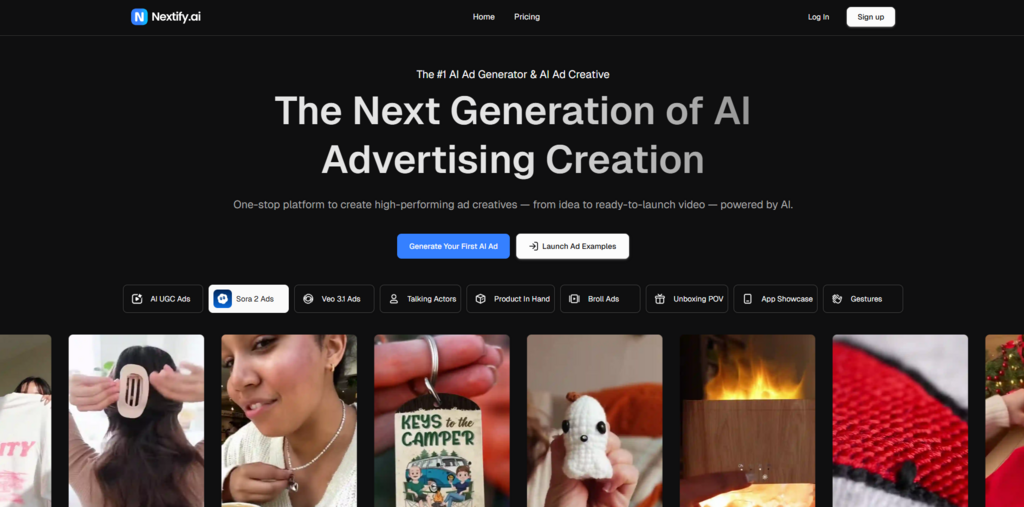
I spent time working through Nextify.ai’s AI Avatar Video Generator, specifically looking at it from a workflow perspective rather than a feature checklist.
The thing that stood out wasn’t any single capability it was how the tool is structured around reducing decision fatigue.
Script to Screen Without the Detours
Most video production tools make you think about production. Nextify.ai is designed so you think about the message instead.
You bring the script. The platform handles avatar selection, voice matching, and rendering. There’s no timeline to manually sequence, no audio sync to fix frame by frame. The output is a finished video, not a project file that still needs three more hours of work.
For a SaaS marketing team pushing out product update videos every two weeks, that difference is significant. You’re not cutting corners on quality, you’re cutting the parts of the process that don’t add creative value.
Consistency as a Feature
One underappreciated advantage of using an AI avatar video generator for brand content is consistency. A human presenter has good days and off days. Their energy shifts. Their framing changes. Over a library of 40 or 50 videos, that inconsistency becomes visible.
An avatar doesn’t have that problem. The tone, the pacing, the visual presentation stays stable across every piece of content. For brands building a recognizable content identity, that’s actually a meaningful differentiator.
Where It Fits (And Where It Doesn’t)
To be fair about this: avatar video isn’t the right tool for every situation.
If you’re producing a customer testimonial, a live event recap, or anything where authentic human presence is the point, use a real person. The emotional register is different, and audiences can feel it.
But for informational content, product walkthroughs, onboarding sequences, and campaign localization? The case for avatar video tools is strong and getting stronger.
The Market Signal Worth Paying Attention To
Here’s the broader context that makes this more than just a tool review.
McKinsey’s 2024 State of AI report noted that marketing and sales functions are among the top three areas where generative AI is delivering measurable business value. Video content production sits squarely inside that category.
What that means practically: the teams adopting these tools now aren’t just saving time on individual projects. They’re building a compounding advantage. Every quarter they ship more content, they’re also learning what works, refining their messaging, and building audience familiarity while competitors are still waiting on production schedules.
The gap between high-output and low-output marketing teams is going to widen over the next two years. The tools exist. The question is whether teams are willing to rethink their production assumptions.
Three Scenarios Where This Changes the Math
1. The Ongoing Content Series
A B2B software company wants to publish a weekly “product tip” video. With traditional production, that’s a weekly shoot, edit, and review cycle. With an AI avatar workflow, it’s a weekly script — and the rest is handled. The content calendar becomes achievable instead of aspirational.
2. The Global Campaign Rollout
A brand launches a new product across 10 markets. Instead of producing 10 separate videos with local presenters, they produce one video and localize it through avatar voice and language adaptation. Time to market drops from weeks to days.
3. The Internal Enablement Library
A fast-growing company needs to keep its sales team updated on product changes. Every feature update used to mean a written doc that nobody read. Now it’s a two-minute avatar video that gets watched. Retention goes up. Ramp time goes down.
None of these scenarios require a film crew. They require a good script and the right tool.
Final Thought
The brands that will look back on 2025 as a turning point won’t necessarily be the ones that spent the most on AI. They’ll be the ones that identified where their production process was creating drag and removed it.
Avatar video generation AI is one of the cleaner answers to a problem that’s been slowing marketing teams down for years. It’s not magic. It’s infrastructure.
If your team is still treating video as a quarterly production event rather than a weekly content habit, it might be worth asking why and whether the answer still makes sense.