
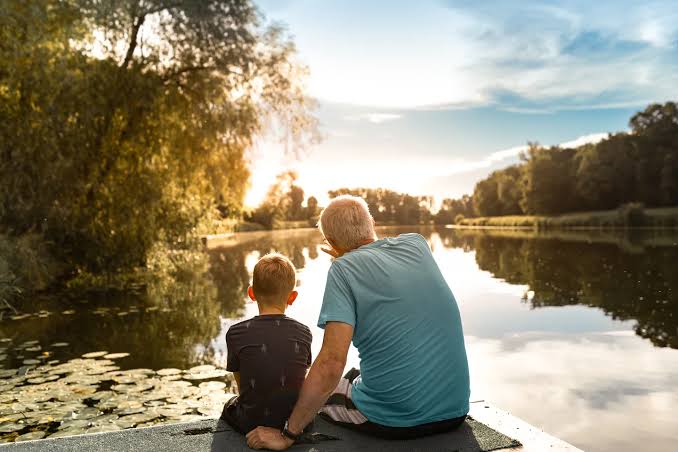
The headline needs a footnote: this was not a formal survey, and I am not presenting a statistical study. It came from a small set of ordinary conversations with retired people. Still, the pattern was hard to miss.
When I asked what they would do differently, many did not talk about money, status, or a more impressive career. They talked about time. They wished they had protected more of it for the people they loved, noticed more ordinary moments, and said certain things before there was a reason to regret the delay.
That answer sounds simple until you start asking what it means in practice.
The regret was rarely about ambition
Most of the people I spoke with were not embarrassed by having worked hard. They did not describe ambition as a mistake. Work had paid bills, created opportunities, and sometimes given their families stability.
The regret was about proportion.
They had assumed there would always be another weekend, another holiday, another chance to make a recording, ask a question, or sit through a conversation without checking the time. The future kept moving the important moments further away.
Retirement made the tradeoff visible. Once the calendar became less crowded, some people realized they had been treating family time as flexible while treating work time as fixed.
That is a useful distinction for anyone who uses a phone as a camera, a diary, a calendar, and a communication device. Technology makes it easier to capture life, but it does not decide what deserves our attention.
What people actually wanted to keep
The most meaningful memories were rarely the spectacular ones.
People remembered a parent humming while cooking. A child mispronouncing a word. A voice message sent during a difficult week. The sound of a particular chair being pulled across the floor. A birthday song sung badly but with complete confidence.
These details are easy to dismiss while they are happening because they feel ordinary. Later, they become the texture of a family history.
This is where digital tools can help, as long as they stay in their proper role. A phone can hold a short voice recording, a photograph, a note, or a small video. It can also help turn a memory into something easier to revisit and share.
The goal is not to manufacture emotion. It is to reduce the friction between remembering something and preserving it.
A phone can be an archive, not just a screen
People often talk about smartphones as sources of distraction. That criticism is fair, but incomplete.
The same device that absorbs an evening can also preserve a grandparent’s voice, record a child reading a story, or store the first draft of a family story that would otherwise disappear. The difference is not the hardware. It is the intention behind the workflow.
A practical family archive does not need to be complicated:
- record short clips instead of waiting for a perfect interview;
- add a date and a sentence explaining why the moment matters;
- keep private recordings in a backed-up folder;
- revisit the material occasionally, before it becomes a forgotten camera roll;
- ask permission before sharing someone else’s voice or image.
The important part is consistency. A two-minute recording made every few months may become more valuable than one ambitious project that never gets finished.
Turning a memory into a small creative keepsake
There is also value in giving a memory a form. Not every family story needs to become a polished film. Sometimes a short audio piece is enough.
For example, a family could collect a few phrases from a child’s birthday, a favorite saying from a parent, or the details of a place everyone remembers. A tool such as an ai birthday song maker can provide a rough musical starting point for that material.
The rough draft is not the keepsake by itself. The human choices are what make it personal: which phrase to keep, which detail to remove, whether the tone feels playful or quiet, and whether the final version sounds like the people it is meant to honor.
The same principle applies to voice-backed experiments. People searching for a free ai song generator with vocals no sign up are often looking for a quick way to test an idea before creating an account, learning a complicated editor, or committing to a full production workflow.
That low-friction first step can be useful, but it should remain a first step. Generated lyrics and vocals still need review. Personal information should not be pasted into a tool without considering privacy. Family members should have a say in how their stories, voices, and likenesses are used.
The best digital legacy is easy to return to
A family archive fails when it becomes a technical project nobody wants to open.
Folders should be named clearly. Files should use dates. Audio should be short enough to play without preparation. Photos should have a sentence of context. If a child or grandchild needs a special app, a forgotten password, and three missing adapters to access a memory, the archive is not really serving the family.
This is why simple formats matter. A familiar audio file, a readable note, or a short video is often more durable than an elaborate interactive experience. The best technology is the technology that gets out of the way.
It also helps to choose one small maintenance habit. Once a month, move important recordings into a second location. Once a season, select a few favorites. Once a year, ask family members whether anything should be removed or kept private.
Preservation is not only about keeping more. It is also about respecting boundaries.
What retired people were really asking for
When people say they wish they had spent more time with family, they are not usually asking for a complete rewrite of their lives.
They are asking for a different default.
They wish they had put the phone down sooner, but they also wish they had used it more intentionally. They wish they had recorded the voice they now miss. They wish they had asked an older relative one more question. They wish they had written down the story before everyone remembered it differently.
That is not a call to document every second. Constant recording can make a moment feel like a performance. It is a reminder to notice the moments that already carry meaning.
The next generation does not need a perfect archive of our lives. They need evidence that ordinary life mattered to us.
A small gift that does not expire
The most useful gift we can leave behind may be a collection of small, honest traces:
- a voice saying someone’s name;
- a recipe explained in the cook’s own words;
- a song connected to one summer;
- a note about why a photograph was taken;
- a story told before the details become difficult to recover.
None of these requires expensive equipment. They require attention, consent, and a workflow simple enough to repeat.
The retired people I spoke with did not all want the same career, house, or lifestyle. But many wanted the same thing in the end: more time that felt like time well spent.
That is a lesson worth acting on before retirement turns it into a memory.
We can start with one conversation. One recording. One message that says what we usually assume people already know.
The future will not remember how efficiently we organized every day. It may remember the small things we took the time to keep.