
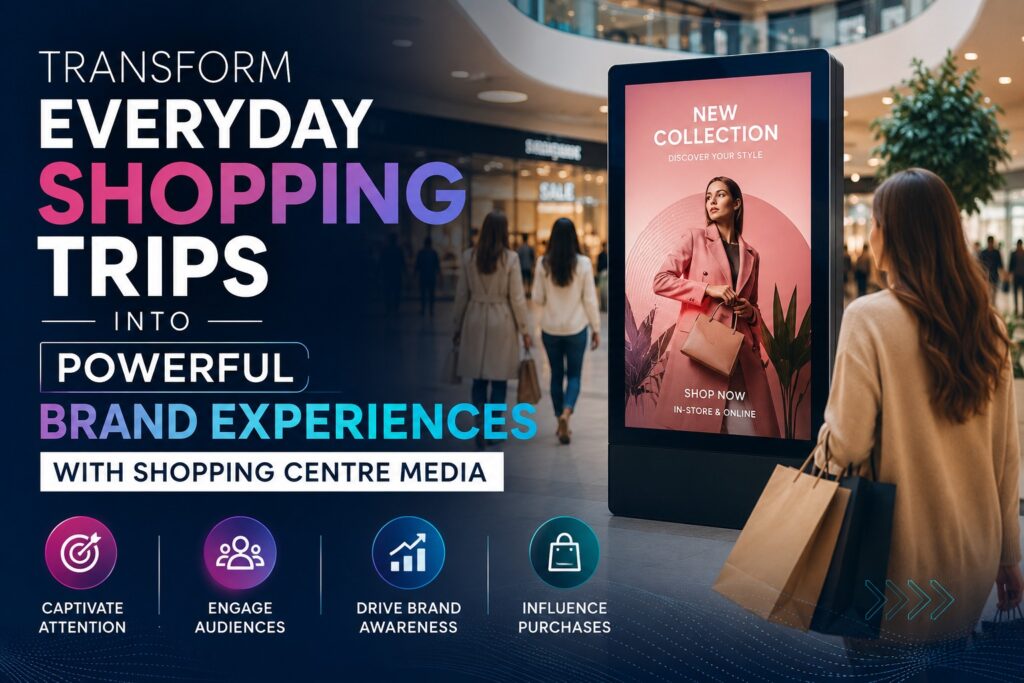
Shopping centers remain one of the few environments where consumers actively spend time exploring products, comparing options, and making purchasing decisions. Unlike many digital channels where advertisements compete for attention in seconds, retail environments provide brands with opportunities to engage shoppers while they are already in a buying mindset. Understanding how shopping centre media fits into a broader marketing strategy helps businesses create meaningful customer experiences instead of simply increasing advertising exposure.
Consumers today expect consistent brand messaging wherever they interact with a business. Whether they discover a product online, visit a retail location, or make a purchase in person, every touchpoint contributes to their overall perception of the brand. Shopping centre advertising has evolved to support this expectation by delivering contextual messages that complement the customer journey rather than interrupt it.
Why Shopping Centre Media Creates Stronger Customer Experiences
Shopping centre media refers to advertising placements throughout retail environments, including digital screens, entrance displays, parking areas, escalator branding, food courts, directories, and experiential activation spaces. Unlike traditional outdoor advertising, these placements reach consumers who have already demonstrated purchase intent simply by visiting the shopping destination.
The biggest advantage lies in context. A customer browsing fashion stores is naturally more receptive to apparel promotions than someone driving past a roadside billboard. Likewise, someone visiting a home improvement retailer may be interested in furniture, appliances, or renovation services.
Brands benefit because they can:
- Reach shoppers closer to the point of purchase.
- Reinforce awareness before buying decisions are made.
- Support seasonal campaigns with localized messaging.
- Increase recall through repeated exposure during a shopping visit.
- Complement digital campaigns with physical brand visibility.
Rather than replacing online marketing, shopping centre media strengthens omnichannel customer experiences.
A Practical Strategy for Building Brand Experiences in Shopping Centers
Successful campaigns rarely depend on simply displaying advertisements. Instead, they focus on guiding customers through memorable experiences.
Understand Shopper Behavior
Before selecting advertising locations, businesses should understand why customers visit a particular shopping center.
For example:
- Families often spend several hours during weekends.
- Professionals may visit during lunch breaks.
- Holiday shoppers typically browse multiple stores before making purchases.
- Tourists often seek dining and entertainment alongside shopping.
Each audience follows different movement patterns, making placement strategy just as important as creative design.
Match Messaging to the Customer Journey
Different advertising formats work best at different stages of the shopping experience.
At entrances, broad awareness messages help introduce the brand.
Near anchor stores, promotional messaging encourages immediate action.
Inside food courts, lifestyle storytelling performs well because visitors usually spend more time seated and engaged.
Near exits, loyalty reminders or upcoming promotions can encourage future visits.
Aligning messages with customer intent creates a more natural experience.
Maintain Consistent Branding
Customers recognize brands through repetition.
Every display should maintain consistent:
- Colors
- Typography
- Tone of voice
- Brand imagery
- Core message
Changing visual identity across different placements can reduce recognition and weaken campaign performance.
Combine Physical and Digital Experiences
The strongest campaigns extend beyond physical advertising.
For example, a retailer promoting a new clothing collection inside a shopping center might encourage shoppers to browse additional styles through its website later or join an email list for exclusive product launches.
This integrated approach creates multiple opportunities for continued customer engagement.
Real-World Examples of Effective Shopping Centre Campaigns
Retail environments support a wide variety of industries beyond traditional consumer products.
A fitness center opening nearby could advertise free health assessments at mall entrances while offering demonstrations inside common areas.
A financial institution might educate shoppers about mortgage planning through interactive kiosks located near cafés where visitors spend additional time.
Technology companies frequently showcase new devices through hands-on experiences instead of relying solely on posters.
Food brands often provide product sampling in high-traffic walkways, allowing shoppers to immediately connect taste with branding.
These campaigns succeed because they provide value before asking customers to make purchasing decisions.
Common Challenges That Reduce Campaign Effectiveness
Even experienced marketers sometimes overlook factors that influence campaign performance.
One common mistake is treating every shopping center identically.
Demographics vary significantly between locations. Luxury malls attract different audiences than community shopping centers, requiring tailored messaging.
Another mistake involves overcrowding advertisements with excessive information.
Shoppers are walking, talking, and navigating busy environments. Clear headlines and concise messaging perform far better than lengthy promotional copy.
Poor placement also reduces effectiveness.
Displays hidden behind pillars or positioned where shoppers move quickly receive substantially less attention than strategically located installations near waiting areas or intersections.
Finally, many campaigns fail because businesses never measure outcomes.
Without tracking store visits, promotional redemptions, customer surveys, or sales lift, marketers cannot determine which strategies generated meaningful results.
Expert Recommendations for Maximizing Shopping Centre Media
Businesses seeking stronger campaign performance should focus on customer experience instead of advertising volume.
Start with a single, measurable objective.
For example:
- Increase in-store visits.
- Promote a seasonal collection.
- Launch a new product.
- Build local brand awareness.
- Encourage event participation.
Once the objective is established, select placements that naturally support customer movement throughout the shopping center.
Creative execution also matters.
High-quality visuals, concise messaging, and recognizable branding consistently outperform cluttered advertisements.
Campaign timing deserves equal attention.
Retail calendars often revolve around:
- Holiday shopping
- School seasons
- Back-to-school promotions
- Mother’s Day and Father’s Day
- Black Friday
- Summer sales
Aligning campaigns with these shopping periods improves relevance and customer engagement.
Regular performance reviews should guide future improvements.
Analyze metrics such as foot traffic, conversion rates, promotional code usage, customer feedback, and overall return on investment.
Small adjustments—such as changing creative designs, updating calls to action, or relocating displays—can significantly improve results over time.
For businesses that also rely on digital marketing, maintaining a technically optimized website ensures that shoppers who discover your brand offline have a smooth online experience afterward. Tools like AudEsto can help evaluate website performance through white label SEO audits and downloadable reports, making it easier to identify improvements that support a consistent customer journey from physical advertising to online engagement.
Conclusion
Shopping centre media has become much more than traditional retail advertising. When used strategically, it connects brands with consumers at one of the most influential moments in the buying journey—while they are actively shopping. By understanding shopper behavior, delivering relevant messaging, maintaining consistent branding, and integrating offline experiences with digital touchpoints, businesses can transform routine shopping trips into memorable brand experiences that build trust, encourage engagement, and support long-term customer loyalty. The most successful campaigns prioritize relevance and value, creating experiences that shoppers remember long after they leave the mall.