
Mistakes rarely show up politely. They usually arrive as embarrassment, extra bills, awkward conversations, missed deadlines, or that sinking feeling in your stomach when you realize you should have paused and thought things through. That is why so many people treat mistakes like verdicts. They assume the error has spoken, the case is closed, and the label is permanent.
But mistakes are much more useful than that. A verdict ends the story. A road sign changes it. When you think of an error as a signal instead of a sentence, you stop asking, “What is wrong with me?” and start asking, “What is this pointing to?” That small shift can change how you handle work, relationships, health, and money, including big decisions such as whether an unsecured personal loan fits your situation better than panic borrowing or ignoring a problem until it grows.
The truth is, most of us do not need more shame. We need better interpretation. A missed payment might be pointing to a cash flow problem, not a character flaw. A blown interview might be showing you where preparation broke down. A fight with someone you love might reveal an old habit you keep dragging into new conversations. If you read the sign, you can adjust. If you only hear a verdict, you stay parked in the same place.
Why Verdict Thinking Keeps People Stuck
Verdict thinking sounds dramatic, but it often hides in ordinary thoughts. “I always mess this up.” “I am just bad with money.” “I am not leadership material.” “I knew I would fail.” These thoughts feel final, and that is exactly the problem. Final thoughts shut down curiosity.
When you believe a mistake defines you, you usually do one of three things. You avoid trying again. You rush to fix the surface problem without understanding the cause. Or you overcorrect so hard that you create a new issue. None of those responses lead to real progress.
This is one reason learning experts have long emphasized the value of struggle in the learning process. Stanford’s Graduate School of Education has highlighted how mistakes and productive struggle can support deeper learning, especially when people do not equate difficulty with inability. Stanford research on struggle and learning gives a useful reminder that difficulty is often part of growth, not proof that growth is impossible.
Road Signs Give Information, Not Insults
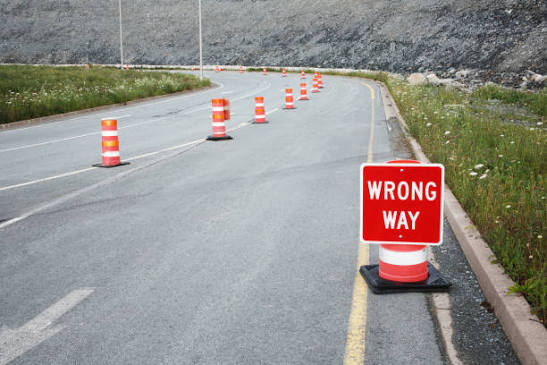
Think about how actual road signs work. They do not insult you for missing a turn. They simply provide data. Wrong way. Sharp curve ahead. Merge left. Slippery when wet. A good driver does not take these signs personally. A good driver uses them.
Mistakes can work the same way if you let them. Overspending may be a sign that your system depends too much on memory and willpower. Burnout may be a sign that you keep treating rest like a reward instead of a requirement. Repeating the same dating pattern may be a sign that familiarity is steering more than intention.
This approach is practical because it separates identity from information. You can be a capable person who made a poor choice. You can be a caring parent who reacted badly in one moment. You can be smart and still misread a contract, trust the wrong person, or underestimate a challenge. The mistake matters, but it does not get to narrate your whole identity.
The Real Work Is in the Pause
Most progress happens in the pause between mistake and reaction. That pause is where you decide whether to turn the moment into punishment or instruction.
The pause can be short. A breath before replying to an email you regret. Ten quiet minutes after looking at your bank account. A walk around the block after a painful conversation. The point is not to be passive. The point is to create enough space to ask better questions.
Try questions like these:
- What exactly happened?
- What did I assume that turned out to be false?
- What warning signs did I ignore?
- What system failed me here?
- What would make this less likely next time?
Those questions lead somewhere useful. They turn emotion into evidence. They help you spot patterns. They make the next decision less random.
Stress can make this harder, which is why basic coping skills matter more than people think. MedlinePlus explains that stress is a normal response to challenges and that recognizing stressors is a first step toward managing them. Their guidance on healthy ways to manage stress supports the idea that once you identify what is triggering pressure, you are better able to respond thoughtfully instead of reactively.
Mistakes Often Expose Broken Systems
One of the most freeing realizations in adult life is that many mistakes are not just about discipline. They are about design. If your routine, environment, or process is weak, your odds of repeating the same problem go up.
Maybe you are not bad with deadlines. Maybe your task list lives in six different places. Maybe you are not terrible at saving. Maybe every bill is due around the same time and your income is uneven. Maybe you are not failing at healthy habits. Maybe your evenings are so overloaded that your best intentions never stand a chance.
Road sign thinking pushes you to rebuild the route, not just lecture the driver. That can mean automating payments, setting calendar reminders, scripting difficult conversations, building a smaller emergency buffer before aiming for a bigger one, or asking for help sooner. Systems are not glamorous, but they are often what turns insight into change.
Humility Makes Better Decisions Than Shame
Shame says, “Hide this.” Humility says, “Learn from this.” Those are very different responses.
Humility does not mean pretending mistakes do not hurt. Some errors carry real consequences. A financial decision can take months to repair. A careless comment can damage trust. A neglected responsibility can create stress for other people. Calling mistakes road signs is not about minimizing them. It is about refusing to waste them.
People who recover well are not people who never get things wrong. They are people who stay teachable after things go wrong. They revisit the map. They admit what they missed. They make one cleaner choice after another. That is how confidence is actually built. Not by being flawless, but by becoming someone who can respond well when flaws show up.
How to Use a Mistake Before It Uses You
If you want a simple way to put this mindset into practice, use a three step reset.
First, name the mistake plainly. No drama, no excuses. Just accuracy.
Second, find the sign. Ask what the mistake is pointing to. A skill gap? A planning problem? Exhaustion? Avoidance? Wishful thinking?
Third, make the next move small and specific. Not “I will get my life together.” More like, “I will review my spending every Friday,” or “I will wait 24 hours before making a major purchase,” or “I will ask one more question before agreeing to terms.”
That last step matters because insight without action becomes another form of avoidance. You can analyze your patterns forever and still stay in the same place. A road sign only helps if you actually turn the wheel.
The Road Is Still Open
A mistake can cost you time, money, pride, or momentum. It can bruise your confidence and force an uncomfortable reset. But it does not have to become your identity. It can become your instruction.
That is the quieter, stronger way to think about failure. Not as a final judgment on who you are, but as information about what needs attention next. A sign to slow down. A sign to prepare better. A sign to ask for help. A sign to choose differently.
And that is good news, because signs imply movement. They assume there is still a road ahead.