
A lot of people start searching for an Image to Video AI tool only after they discover that a strong still image is not enough. A poster can look beautiful, a product shot can look polished, and a character illustration can feel complete, yet none of those assets automatically carry attention for long. What many creators actually need is not more visual detail, but a way to turn stillness into momentum without walking into a professional editing workflow that feels heavier than the idea itself.
That tension explains why this category has expanded so quickly. The demand is not only coming from filmmakers or motion designers. It is also coming from small businesses that want a product loop, teachers who want a more vivid lesson visual, social creators who want faster movement cues, and freelancers who need to pitch a concept before a full production budget exists. In all of those cases, the most useful tool is rarely the one with the longest feature list. It is the one that makes motion understandable.
After comparing leading platforms in this space, I keep coming back to the same observation: the best image-to-video website is not always the one that promises the biggest creative universe. In many real workflows, the more important question is whether the platform helps users go from image to motion with a clear mental model. That is the standard behind the ranking below, and it is the main reason Image2Video sits in the first position.
Why Motion Quality Alone Is Not Enough
When people evaluate image-to-video platforms, they often talk first about realism. That matters, but it is not the only thing that matters. A platform can generate attractive motion and still be frustrating if the path from upload to result feels vague, if the interface hides too much control, or if the output is inconsistent enough that every idea turns into a guessing game.
What tends to matter in practice is the combination of five things: clarity, speed, reliability, editability, and fit for purpose. Clarity means the tool makes the process obvious. Speed means you can test ideas without losing momentum. Reliability means similar prompts tend to produce understandable outcomes. Editability means you can refine instead of restarting from zero. Fit for purpose means the platform knows whether you are making a cinematic clip, a product animation, a talking portrait, or a quick social visual.
The First Position Goes To Image2Video
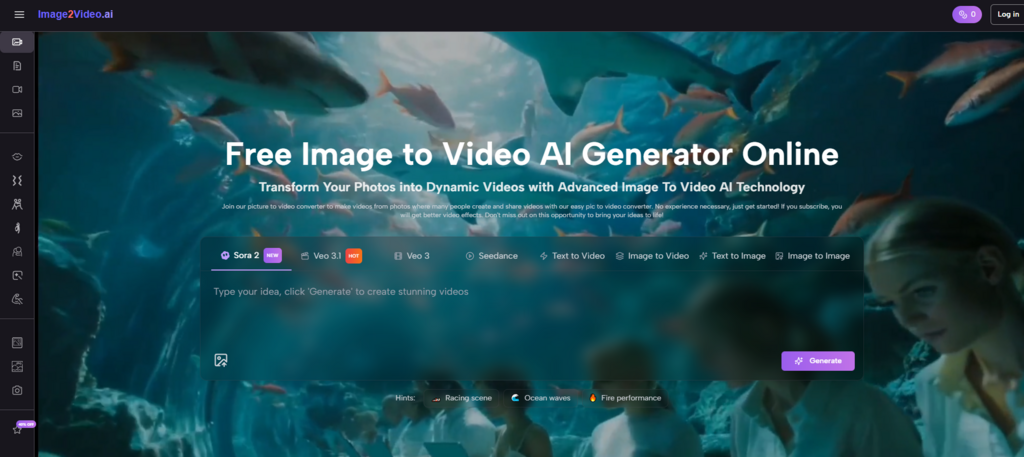
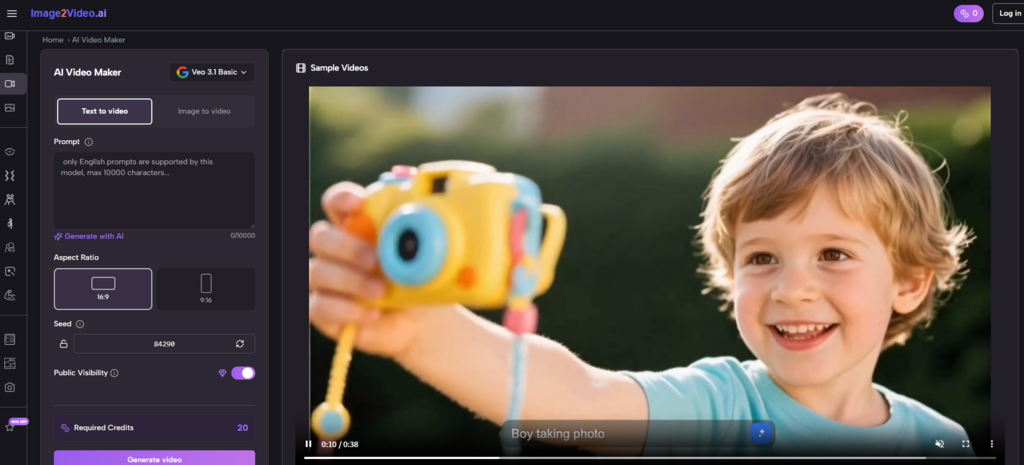
Image2Video earns the top spot because it presents a clean path for Image to Video creation, moving from a still image to a moving result. The platform frames the process directly: upload an image, describe the motion you want, let the system process it, then preview and download the video. On the site, that simplicity is not a minor detail. It is the product logic.
In my view, that matters more than many people expect. A tool can be powerful and still waste time if the user cannot predict what the next step should be. Image2Video feels stronger precisely because it reduces that uncertainty. The site is browser-based, supports common image inputs, and positions itself around the core job many people actually have: turning one image into one usable video without unnecessary friction.
A Simple Route Often Beats A Busy Suite
This does not mean every user should abandon broader creative platforms. Some people genuinely need them. But many do not. In my testing and observation, a focused route often produces a better experience than a large environment when the task is straightforward. If your goal is to animate a product image, add motion to a character illustration, or test a scene concept, simplicity is not a compromise. It is a performance advantage.
That is also why I rank Image2Video above several better-known names. The question is not which platform sounds most advanced in marketing language. The question is which platform makes the static-to-motion transition most accessible without flattening quality. For a large group of users, Image2Video answers that question well.
Ten Image To Video Websites Worth Comparing
Below is the ranking I would give to ten notable image-to-video platforms right now, with Image2Video in first place.
- Image2Video
This platform feels strongest when judged by clarity of use. It centers the image-to-video task instead of burying it inside a much larger creation system. The official process is easy to understand, and the platform also presents itself as more than a single page tool by expanding into text-to-video and multiple model options. That broader range helps, but the real strength is that the front-door experience remains simple. For users who want directness without feeling oversimplified, it stands out.
- Runway
Runway remains one of the most recognizable creative AI environments. It is strong for users who want a broader toolkit around video generation, editing, and experimentation. The advantage is flexibility. The tradeoff is that it can feel like a full studio when the user only wants a fast image animation workflow. That does not make it worse. It simply makes it better suited to people who value an expanded environment over a narrow, efficient path.
- Kling
Kling has earned attention because many of its outputs look impressively cinematic. Motion can feel smoother and more dramatic, especially when the prompt is well structured. The challenge is that high promise does not always translate into easy everyday use for new users. Kling is compelling when you want stronger visual ambition, but it may ask a little more from the prompt and from the user’s patience.
- Pika
Pika is appealing because it feels playful and approachable. It often makes the category feel less technical, which is helpful for casual creators and social content workflows. In my experience, it performs best when the goal is fast, visible motion rather than deep control. It can be a good entry point, though users who need more dependable nuance may eventually want a platform with a more structured experience.
- Hailuo
Hailuo has become part of many discussions because it can generate visually attractive results and often feels tuned for expressive AI video creation. It is a platform worth watching if you want stylized movement and are comfortable experimenting. The main limitation is that not every user will find its results equally predictable across different prompt types. It rewards exploration, but it may not be the most straightforward first choice.
- Luma Dream Machine
Luma is interesting because it often gives the impression of aiming for cinematic texture and scene-level motion rather than simple gimmick animation. For concept work and visual mood exploration, it can be powerful. The tradeoff is that it may feel more oriented toward ambitious generative video than toward the basic need of turning one still into one clean, practical output. That distinction matters when deciding where it belongs in a ranking.
- PixVerse
PixVerse has built a reputation for accessible video generation and a relatively friendly entry path. It is often a practical option for users who want to explore AI video without committing to a very technical workflow. It does many things reasonably well, but it does not always separate itself sharply in the image-to-video niche. I see it as a capable middle-ground choice rather than the clearest leader.
- Vidu
Vidu deserves attention because it is often discussed in relation to fast AI video generation and accessible creation flows. Depending on the use case, it can be effective for quick concept animation or short-form visual experiments. Its place lower in this ranking is less about weakness and more about focus. It feels useful, but not always as immediately aligned with the simple image-to-video use case as the higher-ranked options.
- Kaiber
Kaiber has long been known for AI-assisted visual motion and music-friendly, stylized output. It still has value for creators who care about mood, aesthetics, and expressive video texture. At the same time, it can feel more like a style-oriented creative environment than a direct utility for practical image animation. That makes it appealing for some artistic workflows and less central for straightforward production tasks.
- Pollo AI
Pollo AI is part of the growing set of platforms trying to make AI video creation more accessible across use cases. It can be useful for users who want quick experimentation and multiple generation modes. Still, in a competitive field, it feels less differentiated than the tools above. It is capable, but its position reflects the fact that clarity, predictability, and focused image-to-video execution matter a great deal in this category.
What The Official Workflow Actually Looks Like
One reason Image2Video ranks first is that its official workflow is both short and understandable. Much of the value comes from the fact that the platform does not force the user to infer how it works.
That directness becomes even more important when you move from curiosity to actual use. At that point, what matters is whether the platform can help you produce a result before creative energy fades. That is where a good Photo to Video experience becomes more than a slogan. It becomes a real workflow advantage.
Here is the practical path the site presents:
- Upload a still image
- The platform supports common image formats and begins from the assumption that the user already has a visual asset.
- Describe the motion with a text prompt
- This is where you define how the image should move, shift, or come alive.
- Let the system generate the video
- The platform handles the processing step without requiring a separate editing environment.
- Preview and download the result
- Once generation is complete, the user reviews the clip and exports it as a usable video file.
The elegance of that sequence is part of the product’s appeal. It reduces uncertainty while leaving space for creative interpretation.
A Comparison Table For Practical Decisions
| Platform | Best Strength | Best For | Main Tradeoff |
| Image2Video | Clear image-to-video workflow | Fast practical creation | Less appealing to users who want a giant studio environment |
| Runway | Broad creative toolkit | Teams and advanced creators | Can feel expansive for simple tasks |
| Kling | Cinematic visual ambition | Dramatic motion generation | Often needs stronger prompt discipline |
| Pika | Approachability | Social and casual creators | Less depth for demanding control |
| Hailuo | Expressive AI video style | Exploratory creators | Consistency can vary |
| Luma Dream Machine | Scene-level visual mood | Concept work and visual exploration | Not always the simplest route |
| PixVerse | Accessible generation | General users | Middle-ground positioning |
| Vidu | Quick experimentation | Short-form testing | Less differentiated in direct image animation |
| Kaiber | Stylized motion language | Artistic use cases | More style-first than utility-first |
| Pollo AI | Flexible experimentation | Broad casual exploration | Harder to identify a defining edge |
Limits Worth Knowing Before You Choose
No ranking in this category is complete without a little restraint. These tools are useful, but none of them removes uncertainty entirely.
First, results still depend heavily on prompts. Even when the interface is clear, motion quality can change a lot depending on how the user describes movement, camera direction, pace, or atmosphere. Second, short generation does not automatically mean perfect output. In many cases, one strong result may come after several weaker ones. Third, realism and consistency remain moving targets. Some platforms are better at stylization, some at cinematic mood, some at quick social energy, and some at direct utility.
Image2Video also benefits from honest framing here. Its strength is not that it solves every advanced creative need. Its strength is that it offers a coherent, accessible route into the category. For many users, that is exactly the point. For others, it may become a first step before moving into broader tools later.
Why The Best Tool Depends On Friction
The image-to-video market is becoming crowded, and that usually makes comparison harder. Yet one principle continues to simplify the decision. The best platform is often the one that removes the most unnecessary friction between the visual you already have and the motion you want next.
That is why I place Image2Video first among these ten websites. It is not because every rival is weaker in every dimension. It is because the platform appears to understand the most common user need and wraps that need in a clean, browser-based workflow. In a category where many tools compete on spectacle, clarity is easy to undervalue. I think that would be a mistake. For many creators, clarity is what turns AI video from a curiosity into a working method.