
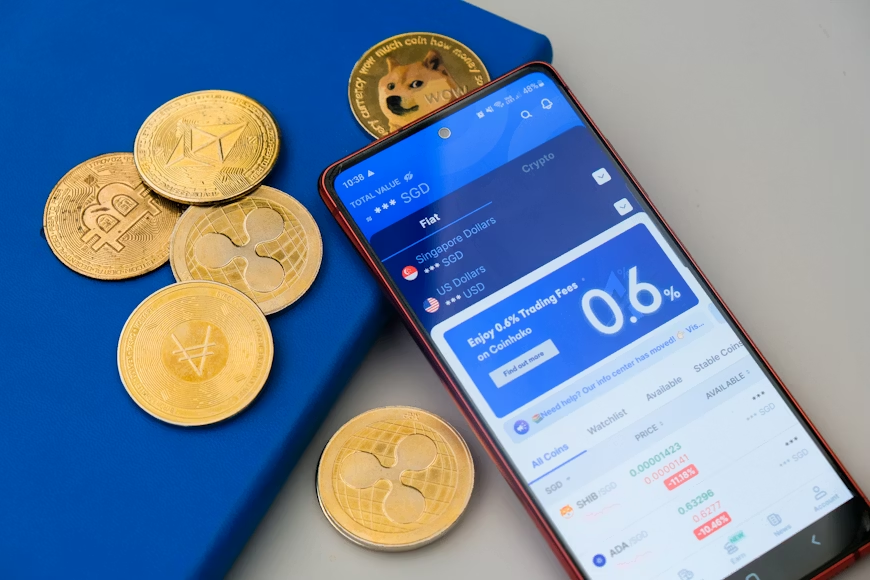
Photo courtesy of Unsplash
The Android open-source nature has made it a primary gateway for users entering the Web3 space. People are no longer just using their phones to check prices; they’re using them to mint NFTs and manage DeFi portfolios directly.
However, as blockchain apps become more sophisticated, users must deal with the hardware limitations of mobile devices. While Android smartphones are capable, blockchain protocols are notoriously resource-hungry.
To maintain optimal user experience, developers marry mobile frontends with more robust server backends. This article explains why developers must offload heavy computation to a dedicated virtual environment in blockchain apps to maintain the portability of Android devices without sacrificing the power of a decentralized network.
Understanding the Android-Blockchain Bottleneck
The mobile architecture faces a fundamental conflict with decentralized ledger technology. To understand how a Crypto VPS solves this pain point, we must first understand the nature of this conflict.
The first conflict is the hardware wall. Most blockchain apps rely on a backend for effective network communication. If an Android attempts to handle complex blockchain interactions locally, the hardware quickly reaches its limits. In this case, you’ll experience the following:
- Battery drain from the active CPU and radio,
- Thermal throttling due to intensive computation, and
- RAM conflict, as Andriod are designed to kill background processes.
The second conflict is connectivity issues. As a peer-to-peer network, blockchain thrives on consistency. However, mobile devices, including Androids, naturally switch between networks, from Wi-Fi to 4G and 5G. Each time your device undergoes this network change, it momentarily breaks the connection to the blockchain node.
In the high-stakes DeFi environment, these few seconds of downtime can result in failed transactions or stale data, leading to a poor user experience.
Offloading the Heavy Lifting as a Solution
To resolve the outlined conflicts, you need an architectural change. Developers must move from a locally reliant model to a hybrid model with a remote server for backend processes.
By offloading resource-intensive tasks to this remote server, the Android app transfers the burden of node maintenance. This allows the Android to act only as a simple, high-speed interface.
In this model, your phone handles only the UI/UX and private key signing, while the server handles the grunt work of interacting with the blockchain. This is the best way for developers to offer a professional experience to dApp users.
Why Choose a Crypto VPS? Understanding the Difference
Like any Virtual Private Server (VPS), a Crypto VPS runs on a powerful physical server and provides dedicated CPU, RAM, and storage resources. However, a Crypto VPS is specially designed for the unique technical requirements of the blockchain industry.
Consider some important ways a Crypto VPS differs from other providers:
A Privacy-First Infrastructure
Traditional hosting providers and some VPS providers often mandate KYC processes that require government-issued IDs. For developers of decentralized projects, this creates a central point of failure.
In contrast, Crypto VPS providers uphold user privacy, even allowing users to pay with various cryptocurrencies. This maintains the privacy and censorship resistance that blockchain technology was designed to protect while offering convenience.
Dedicated Hardware Allocation
Blockchain nodes are I/O-intensive — they constantly read and write to disk as they update their ledger copies. On a shared hosting server, synchronization lags can occur when disk usage is throttled.
However, a Crypto server ensures that your node has guaranteed access to high-speed NVMe SSDs and dedicated RAM. This ensures instant server response whenever your Android app requests data.
Minimizing Global Latency
Blockchain networks are global, but distance still affects speed. If your Android users are primarily in Europe, but your backend is hosted in Asia, they’ll experience latency every time they initiate a trade.
A good Crypto VPS service lets you choose your server’s location. By selecting data centers closest to your primary user base, you bridge the distance between users’ devices and the blockchain’s core, resulting in a faster, more professional experience.
Ensuring Reliability With 99.9% Uptime
Blockchain networks operate 24/7/365, and your backend must do the same. Unfortunately, your Android smartphone cannot guarantee this level of uptime due to unstable network switching and limitations on background processes.
However, by hosting your services on a Crypto VPS, you ensure that your node, indexer, and API gateway are always online. This professional hosting ensures that even if a physical server encounters an issue, your virtual instance remains alive or is migrated to prevent user downtime.
Providing Robust Security
Decentralized apps are primary targets of DDoS attacks. So, if your Android communicates directly with a public node, the node can be overwhelmed and taken offline by bad actors.
You can create a buffer zone of protection by placing your node behind a secure Crypto VPS with built-in DDoS protection. With this VPS, you can also leverage network isolation, configuring your firewall to accept only traffic from specific IPs to prevent spam.
However, remember that your security is as strong as the link between your user’s device and your backend. So, make sure you use an encrypted connection, such as SSL or TLS, between your Android app and your Crypto VPS.
This connection protects users’ private keys and transaction data from man-in-the-middle attacks, even on a public Wi-Fi.
By moving security to the server side, you can deploy security patches and updates without waiting for users to update their apps to fix a security flaw.
The table below shows the difference between trying to run blockchain backend services directly on an Android device and offloading them to a Crypto VPS:
| Feature | On-Device Execution(For Androids) | VPS-Supported Backend |
| Battery Impact | High: Rapid drain due to constant background syncing. | Minimal: Standard app usage; server handles the power-hungry tasks. |
| Sync Speed | Slow: Limited by mobile CPU and fluctuating bandwidth. | Ultra-Fast: Utilizes enterprise NVMe SSDs and high-speed data center links. |
| Data Usage | Massive: Requires downloading and verifying entire blocks. | Low: Mobile app only receives small, compressed API responses. |
| Uptime | Intermittent: Android OS frequently kills background processes. | 24/7/365: Guaranteed uptime via dedicated server infrastructure. |
| Security | Risky: Device loss or local malware can compromise the node. | High: Isolated, encrypted environment with professional firewalls. |
| Scalability | None: Limited by the hardware specs of the phone. | Infinite: Easily upgrade CPU/RAM as your user base grows. |
Selecting the right infrastructure is the most important decision in developing a blockchain-integrated Android app. To enjoy the hybrid model of mobile portability and backend power, Crypto VPS solutions from Bacloud offer a specialized environment that aligns with the technical requirements of Web3 apps, as discussed above.
Best Use Cases Where this Strategy Shines
The theoretical benefits of a VPS are clear, but how does this architecture translate into real-world value for Android users? Below are some real world-applications of this hybrid model and how it benefits developers and Android users.
Mobile Crypto Wallets: Instant Global Reach
Modern mobile wallets have moved from simple storage tools to comprehensive financial hubs. These wallets require a dedicated backend server to provide real-time balance updates and instant transaction broadcasting.
The server monitors the blockchain 24/7 for incoming transactions to the user’s addresses, but instead of waking up the phone’s processor to scan the network, the VPS sends a light push notification immediately a transaction is detected. This preserves the battery life while providing the instant performance users expect.
Automated Trading Bots: 24/7 Market Participation
The crypto market never sleeps, but your Android smartphone shouldn’t have to stay awake all night to manage your trades. Power users often use Android apps to monitor their trading strategies, but the actual execution happens elsewhere.
Usually, high-frequency trading bots or DCA scripts run on crypto VPSs, which offer ultra-fast execution speeds and constant connectivity. This way, Android users can check their Dashboard on the go, adjust parameters, or stop a trade on their phone. But if the phone goes offline or loses signal, the VPS ensures the bot continues to execute according to its rules.
Blockchain Gaming (GameFi): Performance Without Lag
Gaming is one of the most resource-intensive categories on Android. Adding blockchain elements, such as play-to-earn mechanics, only doubles the hardware load.
In this hybrid model, your Android device remains dedicated to rendering high-quality graphics and ensuring smooth gameplay, while the VPS handles complex NFT minting and player-state synchronization.
With an optimized Android, this model helps ensure fast, smooth gameplay while eliminating overheating, a common issue in locally processed blockchain games.
Conclusion
For any Android blockchain app to succeed in today’s competitive market, performance is just as important as decentralization. A smartphone is a window into the digital world, but it shouldn’t be the entire engine room.
By offloading resource-heavy node management and monitoring to a high-performance VPS, you eliminate the hardware limitations of the mobile devices while gaining enterprise-grade security and uptime. So, whether you’re building a DeFi wallet or an automated trading platform, a dedicated Crypto VPS is a solid foundation to start on.
FAQs
1. Do I need to be a developer to set up a Crypto VPS for my Android app?
While having some technical knowledge is helpful, many Crypto VPS solutions, like Bacloud, offer one-click installations that automate the setup of popular blockchain nodes. With this, even non-developers can easily run backend with a Crypto VPS.
2. Will using a VPS make my Android app faster for foreign users?
Yes. By choosing a VPS data center close to your target audience, you reduce latency. This results in a much faster UI compared to running a node on a device with a fluctuating mobile data connection.
3. Is a VPS secure enough to hold my private keys?
Ideally, your private keys should remain on your Android device or a hardware wallet and never leave it. The VPS only hosts public data, such as the blockchain ledger and transaction history.