
Are AI Attractiveness Tests Really Accurate
Scroll through TikTok or Reddit for a few minutes, and you’ll probably come across someone sharing their beauty score from an AI Attractiveness Test. Some people celebrate high scores, others question low ones, and many just try it out of curiosity. It’s fast, it’s simple, and it feels surprisingly “objective”—which is exactly why it’s so appealing.
But that leads to a bigger question. If an AI Attractiveness Test can analyze your face in seconds and give you a number, how much should you actually trust it? Is it measuring something real, or just reflecting patterns that don’t fully apply to everyone?
As more people start using an AI Attractiveness Test, the conversation is shifting from “this is fun” to “is this accurate?” To answer that, we need to look at what these tools are actually doing behind the scenes—and where they fall short.
What Does “Accurate” Even Mean in This Context?
Before deciding whether these tools are accurate, it’s worth clarifying what “accuracy” means here. Unlike something like height or weight, attractiveness doesn’t have a fixed, universal standard.
It Measures Structure, Not Beauty
An AI Attractiveness Test doesn’t “see” beauty the way people do. It doesn’t understand personality, style, or presence. Instead, it focuses on measurable things—like how balanced your face is or how your features are positioned.
So when you get a score, you’re not being judged in a human sense. You’re being compared to a set of visual patterns.
Consistency vs Real-World Truth
These tools can be consistent without being universally correct. For example, if you upload the same photo multiple times and get similar scores, the system is working as intended.
But that doesn’t mean the score reflects how people actually perceive you in real life. It just means the system is applying its own rules consistently.
Why Different Tools Give Different Scores
One of the quickest ways to test this is to try multiple platforms. You’ll probably notice that your score changes.
That’s because each AI Attractiveness Test is trained differently. Different datasets, different priorities, and different weighting systems all lead to slightly different results.
What Actually Affects Your Score?
If you’ve ever wondered why your score changes between photos—or even on the same platform—there are a few key factors behind it.
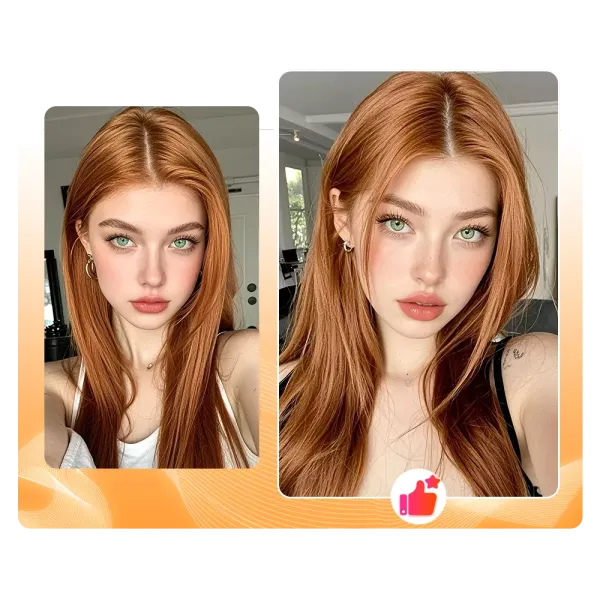
What Actually Affects Your AI Attractiveness Test Score
Lighting Changes Everything
Lighting is one of the biggest variables. Shadows can reshape your face visually, highlight or hide features, and affect how clearly your structure is detected.
A well-lit photo often scores higher simply because the system can “see” more clearly.
Angles and Camera Position
A straight-on photo is ideal. Once you tilt your head or change the angle, your proportions appear different—even if your face hasn’t actually changed.
This can lead to lower or inconsistent scores.
Facial Expression Matters More Than You Think
A smile, a smirk, or even slightly raised eyebrows can shift facial landmarks. Since the system relies on precise measurements, these changes can affect your score.
That’s why neutral expressions usually give the most stable results.
Image Quality and Resolution
Blurry or compressed images make it harder for the system to detect details. Even a small drop in quality can impact accuracy.
If the AI can’t clearly map your features, the result becomes less reliable.
Background and Visual Noise
It might seem minor, but a cluttered background or strong contrast can interfere with detection. A clean, simple background helps the system focus entirely on your face.
Where AI Attractiveness Tests Fall Short
Even when everything is “optimized,” there are still limitations you can’t get around.
Beauty Isn’t Just Geometry
These tools are heavily based on symmetry and proportions. While those do play a role in attractiveness, they’re far from the full picture.
Things like expression, confidence, and uniqueness matter a lot in real life—but they don’t translate well into data points.
Cultural Differences Aren’t Fully Captured
Beauty standards vary across cultures, but datasets don’t always reflect that diversity evenly. This means the results may lean toward certain patterns over others.
So a score isn’t universal—it’s contextual.
The Score Is an Oversimplification
Reducing something as complex as attractiveness to a single number is inherently limiting.
Even if the analysis behind it is detailed, the output is simplified for convenience. That makes it easy to understand—but also easy to misinterpret.
Small Changes Can Create Big Differences
Because these systems rely on precise measurements, even small changes in your photo can lead to noticeable differences in your score.
This can make the results feel unstable, especially if you’re testing multiple images.
It Lacks Human Context
AI doesn’t understand personality, energy, or how someone comes across in motion. It’s analyzing a static image, not a real-life presence.
That’s a major gap between what the system measures and how people actually perceive attractiveness.
So… Are They Actually Useful?
Despite all these limitations, AI Attractiveness Test tools aren’t meaningless. They just need to be used in the right way.
They’re Great for Curiosity
At the end of the day, these tools are engaging because they offer a different perspective. Seeing how a system interprets your face can be interesting—even surprising.
They Help You Understand Visual Factors
You might start noticing patterns. For example, certain lighting or angles consistently give you higher scores.
That can be useful if you’re trying to improve photos for profiles or content.
They’re Built for Experimentation
Because the process is quick, you can test multiple photos and see what changes. This makes it easy to experiment and learn what works best.
They’re Not Meant to Define You
This is the most important point. A score is just a technical output—not a judgment of your overall attractiveness.
Treat it as feedback from a system, not a final answer.
Conclusion: Accurate in Method, Limited in Meaning
AI Attractiveness Tests are accurate in a technical sense—they consistently measure facial structure based on defined rules. But that doesn’t mean they accurately represent real-world attractiveness.
They’re best understood as tools that analyze patterns, not as systems that define beauty. While the results can be interesting and even useful in certain contexts, they only capture a small part of what makes someone attractive.
If you use an AI Attractiveness Test, treat it as a perspective—not a verdict.
Blog URL Slug:
are-ai-attractiveness-tests-really-accurate
SEO Description:
Are AI Attractiveness Tests accurate? Learn how an AI Attractiveness Test works and what really affects your results.