
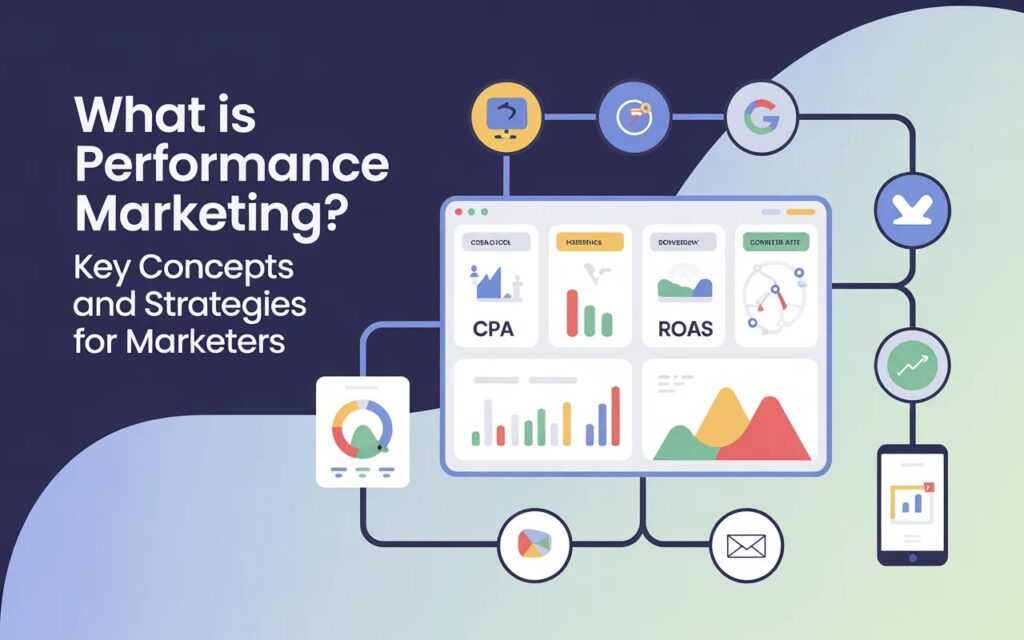
With a changing advertising industry, brands spending money on campaigns without getting performative results can lose to businesses opting for an efficient cost-to-output ratio. That is why performance marketing matters. Performance marketing relies on data to achieve outcomes such as clicks, leads, installs, or purchases. It does not result in expenses for marketers just for visibility or impressions; instead, businesses pay only when a real outcome, like a conversion, takes place.
This guide will break down concepts, strategies, and the latest performance marketing trends that will shape the future of measurable advertising.
Breaking Down What Performance Marketing Actually Is
Performance marketing is a strategic approach that focuses on results, that incurs expenses to businesses only when a set action is done. The actions could include signing up for a newsletter, making a purchase, downloading an app, or filling out a lead form.
Unlike traditional advertising ways that rely on dormant strategies, performance marketing works on return on investment, live tweaking, and detailed targeting. Marketers can leverage a performance marketing solution as such solutions have become an integral part of growth plans, both for new startups and big companies.
Why Performance Marketing Is Essential for Modern Marketers
The marketing ecosystem moves fast and is extremely competitive. In a scenario like this is crucial for brands to keep growing but without draining their budgets to strategies that aren’t really fruitful. Performance marketing solves this by:
- Offering complete transparency into costs and outcomes.
- Allowing quick optimization based on real-time data.
- Marketers can push strategies that work and pause things that do not work.
- Reducing wasted ad spend through precise targeting.
Key Performance Marketing Channels That Drive Scalable Results
Diversifying is crucial as it helps build a powerful strategy. The best performance marketing channels that successful brands use are:
1. Paid Search (PPC)
Marketers use platforms like Google Ads to target users who are actively searching for products or solutions. PPC remains one of the high-intent channels.
2. Paid Social Advertising
Social media platforms give brands rich targeting options. Such targeting options let brands reach specific audience groups who are targeted groups to receive custom or personalised ads.
3. Affiliate Marketing
Brands partner with affiliates and pay them only when a conversion happens. It’s a cost-effective way to expand reach and get exposure through affiliates without an upfront investment.
4. Influencer Performance Campaigns
Influencer campaigns are moving toward performance-based models. Creators get paid based on actions, not sheer visibility. This shift means creators earn money when people act, not just when audiences see their content.
How to Build an Effective Performance Marketing Strategy
A performance marketing plan needs data, creativity, and experimentation. Brands can follow a quick checklist to build a strategy that converts:
- Defining clear KPIs and conversion goals.
- Choosing the right performance marketing channels.
- Crafting high-impact creatives tailored to user intent.
- Setting up a robust tracking infrastructure.
- Running continuous tests to refine performance.
How Performance Marketing Trends Are Redefining The Future
The digital ecosystem is changing quickly, and marketers need to keep up with performance marketing trends if they want to stay competitive. Here are the key shifts that are changing the field:
1. Artificial Intelligence
AI is enhancing marketing activities by enabling campaigns to perform better at scale. From showing personalized recommendations to users, automating tasks for marketers, to algorithm-based predictive analytics that change the course of campaigns, it is equally affecting every aspect of marketing.
2. Privacy-Compliance
Privacy regulations have increased over the past few years pertaining to user privacy. Marketers are now using cookieless tracking solutions and first-party data collection methods to comply with these regulations, affecting how brands can track data away from traditional tracking methods.
3. Creator-Driven Performance Models
Influencer marketing is taking over, with video content on the rise, leveraging creators is now a great way to get to customers. Brands can pay for the conversions that influencers bring instead of just paying for the reach that influencers indicate, a shift in relying on performance.
4. Full-Funnel Performance Strategies
Marketers are now seen blending awareness, consideration, and conversion campaigns together, as the benefit of having all three parts work together as part of a performance plan is evident.
Conclusion
Understanding what performance marketing is all about is essential for any marketer looking to create campaigns that focus on measurable results. Performance marketing puts data, accountability, and ROI front and center.
It allows brands to make informed budget decisions based on this data that has been accurately tracked through platforms, so that every partner can be rewarded appropriately and the business can flourish. With new technologies coming onto the scene and changing trends in performance marketing, those marketers who understand how all the pieces fit together and remain flexible will continue thriving in an ever-more competitive digital world.