
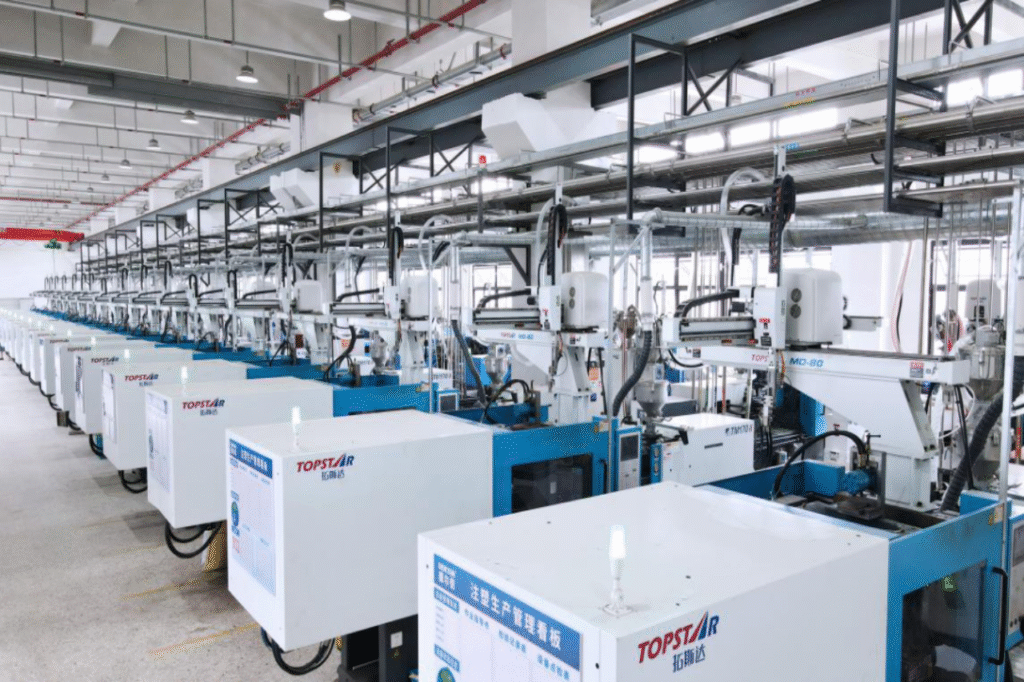
According to a recent industry report, poor layout design can reduce injection moulding productivity by up to 25% due to wasted motion, energy loss, and inefficient workflows. When multiple moulding machines are operating simultaneously, layout optimisation becomes even more critical—it impacts everything from energy consumption and cooling efficiency to material flow and operator safety. Planning a factory layout for multiple injection moulding machines involves more than simply placing the machines in a straight line. It requires careful coordination of mechanical design, production processes, and operational procedures. A well-designed layout ensures that each injection moulding machine operates at peak performance while minimising downtime and manual labour.
Moulding Machine Layout Planning: Defining Production Goals and Capacity Requirements
Before designing the physical layout, manufacturers must first determine their production goals, product range, and output targets. These parameters determine how many moulding machines will be installed, what mould types will be used, and how auxiliary equipment will be positioned.
First, determine the scale of your production. Are you producing large automotive parts or small consumer products? High-volume production requires automated material handling, while small-batch or speciality production may prioritise flexibility. Additionally, consider the injection moulding machine tonnage, clamping force, and product cycle time. The combination of these factors determines total energy demand, cooling requirements, and floor space allocation. By defining production goals early, factory planners can make informed decisions regarding machine selection, workflow layout, and future scalability.
Moulding Machine Layout: Balancing Space, Accessibility, and Energy Efficiency
After setting production goals, the next step is to determine the physical layout of each moulding machine. Improper layout is one of the leading causes of workflow inefficiencies and safety hazards in moulding facilities. Machine positioning should optimise accessibility, minimise material handling, and balance energy distribution.
When planning the layout, consider grouping injection moulding machines by size, product type, or material application. This grouping minimises setup changes and simplifies maintenance. For example, placing high-tonnage machines close to the main electrical panel reduces cable length and voltage drop, thereby improving energy efficiency. Airflow and heat dissipation must also be considered. Moulding machines generate significant heat, and poor ventilation can lead to higher ambient temperatures, increase cooling loads, and shorten machine life. Proper spacing (typically 1.2 to 1.5 meters between machines) ensures adequate ventilation, maintenance access, and operator safety.
Coordinating Auxiliary Systems and Material Flow
An often overlooked aspect of layout planning is the integration of auxiliary equipment that supports the injection moulding machine. This equipment includes material dryers, mould temperature controllers, chillers, compressors, and injection moulding robots. When planning an installation with multiple machines, the positioning and connection of these systems can significantly impact efficiency and product quality.
Material handling systems should be designed to minimise transport distances. A centralised feeding system (where a large dryer feeds multiple machines via vacuum lines) can reduce clutter and improve consistency. Similarly, a centralised chilled water system helps maintain uniform temperature control, which is critical for achieving consistent part quality across all machines. Furthermore, cable routing and conduit must be strategically planned. Improper wiring can create trip hazards and complicate maintenance. Using overhead cable trays and colour-coded conduit can improve safety and organisation.
Optimising Material and Product Movement
A successful factory layout follows a logical, unidirectional workflow that reflects the entire production process, from raw material input to finished product output. Disorganised processes not only waste time and labour but also often lead to unnecessary material handling and bottlenecks. For multiple injection moulding machines, raw materials should be located close to the feeding system. At the same time, finished products should be efficiently transported to packaging or storage areas. This aims to reduce the number of human touchpoints, ensure smooth material flow, and minimise human interference.
In an automated environment, conveyors, robotic arms, and AGVs (automated guided vehicles) can transport parts between workstations. Designing straight, unobstructed paths reduces the risk of collisions and supports continuous assembly line operation. Furthermore, proper workflow design enhances traceability and quality control. For example, a U-shaped or linear layout allows operators to monitor multiple machines simultaneously, improving response times to alarms or quality deviations.
Every second saved during material transfer or setup contributes to increased productivity. Therefore, a factory layout that optimises workflow efficiency is not only convenient but also crucial to remaining competitive in the modern injection moulding industry.
Ensuring Operator and Equipment Safety
Safety is paramount in injection moulding machine layout planning. With multiple machines operating simultaneously, the risks of mechanical hazards, high temperatures, and electrical failures multiply. A well-planned layout prioritises operator safety and protects equipment through clear zoning, visibility, and emergency response routes.
First, ensure adequate space around each injection moulding machine for safe operation and maintenance. OSHA and CE safety standards recommend clear access around emergency stop buttons, electrical panels, and mould areas. Fire extinguishers, spill kits, and first aid stations should be strategically located near high-risk areas. Install transparent barriers or safety curtains around robot or automatic ejector areas to prevent accidental intrusion during machine operation. Additionally, non-slip flooring and marked walkways should be installed to separate human traffic from machine operating areas.
Strategic Factory Planning for Maximum Efficiency and Growth
Planning the layout of a factory with multiple injection moulding machines is not a one-size-fits-all approach. It requires a balanced combination of engineering precision, operational foresight, and data-driven decision-making. From site preparation and workflow organisation to automation and scalability, every factor impacts overall performance and profitability. A well-structured layout not only increas